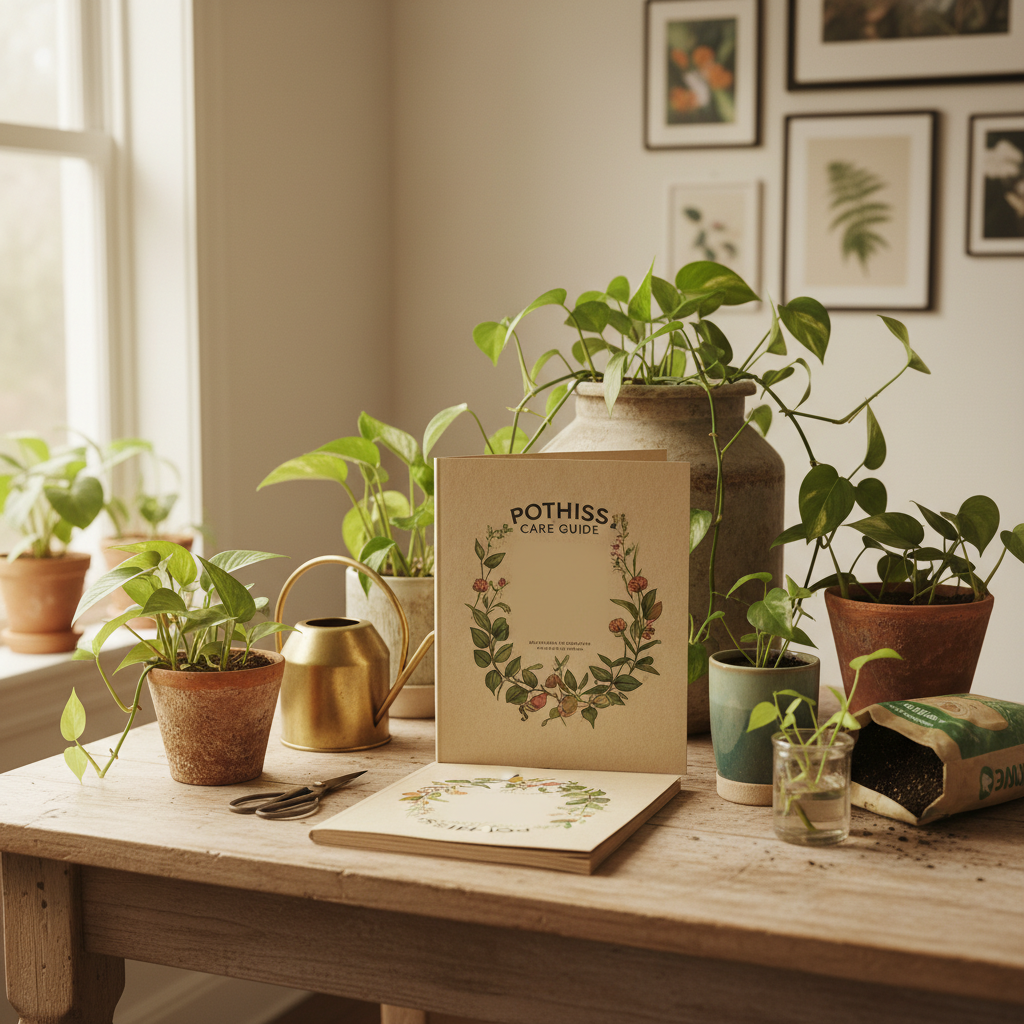
I weighed three pothos pots over 14 days last spring, and the one in terracotta lost 182 grams faster than the one in plastic. That tiny difference explained why one plant stayed crisp and the other sulked with yellow leaves. At least once a week someone brings in a Epipremnum aureum with soggy roots and says they barely watered it.
Pothos is forgiving, not indestructible. Give it filtered light, let the pot dry partway, and use a chunky mix with drainage.
1. Light That Keeps Pothos Happy
Pothos earns its reputation because it tolerates more than it prefers. The sweet spot is medium to bright indirect light, roughly 2000-5000 lux, or a spot near an east-facing window with 1-2 hours of soft morning sun. In my shop, the plants that stay full and dark green are usually 3 to 6 feet from a west window, not shoved into a dim hallway.
Most guides act like pothos can live anywhere. That’s half true and half lazy. Yes, it’ll survive in lower light, but the stems stretch, the leaves shrink, and variegated cultivars like pothos Epipremnum aureum ‘Marble Queen’ or ‘N’Joy’ lose contrast fast. A north-facing window in USDA zone 9 apartment light is fine if it’s unobstructed; a corner 12 feet away from glass is not.
Side note: the gold pothos customers call “plain green” is often just starved for light, not genetically boring. If you want a fuller plant, rotate the pot a quarter turn every 7 days so the vines don’t lean like they’re trying to escape.
2. The watering habit that finally stopped the mushy roots
I see more pothos killed by kindness than drought. Water when the upper 2 inches, about 5 cm, feel dry, then soak until you get runoff. For a 6-inch pot, that usually means 300-500 ml depending on the mix and how rootbound it is.
Most internet advice says “water on a schedule.” I disagree because apartment humidity changes everything. In a 72°F/22°C room with 35% humidity, a pothos in plastic may need water every 8-12 days. In a terracotta pot on a sunny sill, that same plant may want a drink after 5-7 days. Your mileage may vary, and that’s normal.
Use your finger, a chopstick, or the pot weight. I tried moisture meters first and they weren’t reliable in chunky mixes; they’d read damp long after the roots were actually ready. If the pot feels light and the soil pulls cleanly from the sides, it’s probably time. If it still feels cold and heavy, wait 2-3 more days.
3. Soil and pots I’d actually stock for pothos
This is where customers overthink it and then buy the wrong bag. Pothos wants a mix that drains fast but doesn’t turn into gravel. My go-to is two parts indoor potting mix, one part orchid bark, and one part perlite. If the plant is in a very bright spot, I’ll add a handful of coco chips for extra air around the roots.
Pot material matters more than people think. Terracotta dries faster and is useful for overwaterers. Plastic holds moisture longer and is better if your home runs dry or you tend to forget watering for 10 days at a stretch. Decorative cachepots without drainage are where I see the worst rot cases, especially after one “helpful” big watering.
A healthy pothos doesn’t need a huge pot. Increase size by just 1-2 inches, not a dramatic jump. A plant in a 4-inch nursery pot usually does well moving to a 6-inch pot, not an 8-inch one. Oversized pots stay wet too long, and wet roots are how you end up buying hydrogen peroxide and a new plant.
4. Pruning, training, and getting the vines to stop looking skinny
If your pothos is long and bare at the base, pruning is not optional. Cut just above a node, and you’ll usually get two new growth points below the cut within 2-6 weeks during active growth. I do this all the time with pothos Epipremnum aureum ‘Golden’ and ‘Manjula’ because customers want a hanging plant, not a single vine with ambition.
Training matters too. A moss pole is more for climbing varieties and larger aroids, but pothos will still root into a support if you keep it slightly moist. For a trailing look, pinch back long stems every month or so. For a fuller pot, root the cuttings and tuck them back into the same container. That’s the cheapest makeover in the shop.
Most people wait until the plant looks terrible before trimming. Don’t. A 15-minute prune in March or April makes a bigger difference than a desperate haircut in November, when growth is slower and the plant won’t rebound as fast.
5. Repotting without turning a sturdy plant into a sad one
After 14 months with my own pothos on a kitchen shelf, I repotted it because roots were circling the bottom like tangled earbuds. The new pot was only 1.5 inches wider. That’s the move. Bigger is not better if the root ball is still small.
Repot in spring or early summer when indoor temps sit around 65-78°F (18-26°C). Water the plant the day before, slide it out gently, and loosen only the outer roots. If you rip the center apart, you’ll stall growth for 2-4 weeks. I haven’t figured out why some customers insist on bare-rooting a pothos like it’s a science fair project, but the plant definitely notices.
For most homes, repot every 18-24 months. If roots are poking from drainage holes or water runs straight through in under 10 seconds, move it up a size. If the plant still looks happy and the pot isn’t crowded, leave it alone. Pothos likes being a bit snug.
6. Yellow leaves, leggy stems, and the shop complaints I hear every day
Yellow leaves usually mean overwatering, not a mysterious nutrient crisis. Brown crispy edges point more toward dry air or underwatering. If the plant is leggy and pale, it wants more light. If new leaves are tiny, check whether the roots are packed hard or the plant has been sitting in the same stale mix for 2 years.
At least once a week someone brings in a pothos with mushy stems and says it “only got one cup of water.” The cup wasn’t the issue. The pot had no drainage, the mix was dense, and the room was 68°F/20°C with low airflow. That combo stays wet forever. Most guides blame fertilizer. Usually, it’s the potting setup.
Here’s the quick rescue order I use: remove bad leaves, check roots, cut rot, repot into a chunky mix, then move the plant to filtered light for 7-10 days. Don’t fertilize a stressed pothos immediately. Wait until you see new growth, usually after 3-5 weeks.
| Problem | Likely cause | What to do |
|---|---|---|
| Yellow leaves | Too much water or poor drainage | Let soil dry more, repot if needed |
| Long bare vines | Low light, no pruning | Move closer to a window, cut above nodes |
| Brown tips | Dry air or inconsistent watering | Water more evenly, raise humidity to 40-60% |
| Small new leaves | Rootbound or low light | Repot 1-2 inches up, improve light |
Q: Can pothos live in a bathroom?
A: Yes, if the bathroom gets real light. A frosted east window or a bright skylight works. A windowless bathroom with a humidity spike and no light is just a slow decline.
Q: Should I fertilize pothos in winter?
A: Only lightly if it’s actively growing. In a cool room around 60-65°F (16-18°C), I usually skip fertilizer entirely from late November through February.
Q: Why do variegated pothos lose their pattern?
A: Usually not enough light. Move it closer to filtered sun for 2-3 weeks and watch the next leaves. If the plant is a solid green cultivar, though, no amount of light will turn it speckled.
Bottom line: give pothos a chunky mix, a pot with drainage, and enough light to keep the vines compact. Which part of your setup needs the most fixing right now?
Related reading
Sources: joyusgarden.com, patchplants.com, provenwinners.com, spiderfarmer.eu, thesill.com