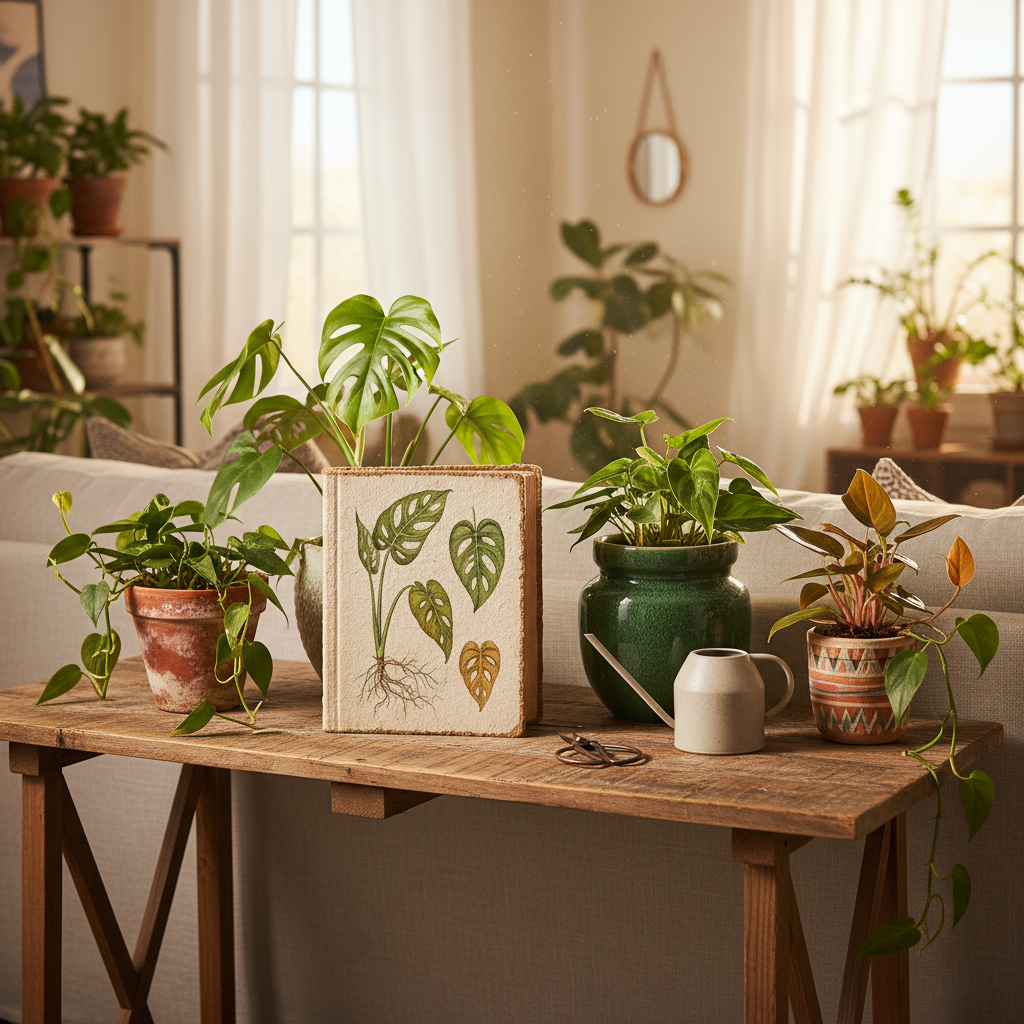
Philodendrons are the kind of houseplants that make you think you’ve got everything under control—until a few leaves start yellowing, the vines stretch out, or the soil stays wet for 10 days straight. The good news is that a solid philodendron care guide is mostly about getting a few simple conditions right: light, water, and a chunky soil mix. Once those basics click, these plants can reward you with fast growth and leaves that actually look like they belong in a tropical greenhouse.
I’ve found that most philodendron problems show up long before the plant looks dramatic. If you catch the clues early, you can usually fix things in under 2 weeks. Here are 6 practical ways to keep Philodendron hederaceum, Philodendron erubescens, and even a cultivar like Philodendron ‘Pink Princess’ growing well indoors.
Most philodendrons do best with 2000-5000 lux, 65-75°F (18-24°C), and a potting mix that dries slightly between waterings.
1. Give Philodendrons the Right Light, Not the Right-Side-of-the-Sun
Light is the first thing I check when a philodendron starts getting leggy. Most species, including heartleaf philodendron (Philodendron hederaceum), do well in medium to bright indirect light, which usually means about 2000-5000 lux. A near east window is often ideal because it gives gentle morning sun for 1-3 hours without cooking the leaves. If your plant sits in a north-facing window, it may survive, but growth can slow down to just a few inches over 4-6 weeks.
Too much direct sun can scorch leaves, especially on variegated cultivars like Philodendron ‘Pink Princess.’ I once moved one too close to a south window in July, and within 3 days the pale sections started looking bleached. A sheer curtain solved it fast. If you only have a dim room, a grow light on for 10-12 hours a day can keep the plant compact and healthy.
How to read the leaves
If internodes are long and leaves are smaller than 4 inches, the plant likely wants more light. If the foliage looks faded or crispy at the edges after 2-3 days near a window, it’s getting too much direct sun. The sweet spot is steady indirect light and a stable spot, because philodendrons dislike being moved every few days.
2. Water Based on Soil Dryness, Not the Calendar
Watering is where most philodendron care guide advice gets oversimplified. Instead of watering every 7 days on autopilot, check the top 2 inches of soil with your finger. If it feels dry at that depth, it’s time to water. In average indoor conditions, that might mean every 7-10 days in spring and every 10-14 days in winter, but your room temperature and pot size matter more than the calendar.
Use enough water to soak the root ball, then let excess drain completely. For a 6-inch pot, I usually pour about 350-500 ml, depending on how dry the mix is. If water is still sitting in the saucer after 15 minutes, dump it out. Philodendrons hate having wet feet for more than 24 hours, and root rot can start faster than most people expect.
What overwatering looks like
Yellow leaves, mushy stems, and soil that stays damp for 5-7 days are red flags. If the pot feels heavy long after watering, the mix may be too dense. I’ve had the best luck with a pot that has at least one drainage hole and a mix that includes bark, perlite, and coco coir. That combination gives roots air while still holding enough moisture for 2-4 days between waterings.
3. Use a Chunky Soil Mix and the Right Pot Size
Philodendrons grow best in airy soil, not heavy garden dirt. A good mix is usually 40% potting soil, 30% orchid bark, and 30% perlite or pumice. That blend drains quickly but still holds moisture around the roots. If you want to be precise, aim for a slightly acidic pH around 5.5-6.5, which suits most philodendron species.
Pot size matters too. A pot that’s only 1-2 inches wider than the root ball is usually enough. If you jump from a 4-inch pot to a 10-inch pot, the extra soil can stay wet too long and cause trouble. I repot young plants about every 12-18 months, and mature vines often go 2 years before needing a larger container.
When to repot
Look for roots circling the bottom, water running straight through in under 30 seconds, or growth stalling for 6-8 weeks in spring. That usually means the plant is ready for a new home. Spring is the easiest season for repotting because temperatures stay around 65-75°F (18-24°C), which helps roots recover quickly.
4. Keep Temperature and Humidity Steady
Philodendrons are tropical plants, so they prefer indoor conditions that don’t swing wildly. The best range is 65-80°F (18-27°C), and they start to sulk if temperatures drop below 60°F (15.5°C) for long. I keep mine away from drafty doors and AC vents because even 2-3 cold nights can lead to droopy leaves.
Humidity matters more than many people think. Aim for 50-70% humidity if you want cleaner leaves and fewer crispy edges. In my experience, a bathroom with a window or a kitchen shelf near a humidifier can work well, as long as the plant still gets indirect light. Dry air below 40% humidity often shows up as brown tips within 1-2 weeks.
Seasonal adjustments
In winter, indoor air can drop to 30-35% humidity, especially with heating running. A small humidifier set near the plant for 6-8 hours a day can help a lot. Just keep the leaves dry enough to avoid spotting, and make sure air can move around the plant instead of trapping moisture in the crown.
5. Feed Lightly During Active Growth
Philodendrons are not heavy feeders, but they do appreciate a little nutrition when they’re actively pushing new leaves. From spring through early fall, I use a balanced liquid fertilizer at half strength every 4 weeks. If the label says 10 ml per liter, I cut it to 5 ml per liter. That keeps growth steady without burning roots or making the plant leggy from too much nitrogen.
Stop feeding in late fall and winter when growth slows. If your plant is under a grow light for 10-12 hours a day and still pushing out leaves, you can continue a lighter schedule, but I’d still avoid feeding every 7 days. Overfertilizing often shows up as crusty white buildup on the soil surface or leaf tips that brown within 10-14 days.
Signs your plant wants food
Pale new leaves, slower vine extension, and smaller-than-usual leaves can all suggest the plant needs nutrients. But before fertilizing, make sure the roots aren’t cramped and the light is adequate. A philodendron in poor light will not use fertilizer efficiently, and that can waste both time and money.
6. Prune, Train, and Troubleshoot Early
One of the best things about philodendrons is how forgiving they are when you prune them. If a vine gets too long, cut just above a node using clean scissors. New growth often appears within 2-4 weeks, especially in spring. For trailing types like Philodendron hederaceum, pruning also helps the plant look fuller instead of stringy.
If you want a bushier plant, pinch the tips when vines reach 12-18 inches. You can also train them up a moss pole if you’re growing a climbing species like Philodendron erubescens. A pole gives aerial roots something to grab, and leaves often get larger over time. I’ve seen leaves nearly double in size after 8-10 weeks on a pole in good light.
Quick troubleshooting checklist
- Yellow leaves: check for overwatering and poor drainage.
- Leggy growth: move closer to 2000-5000 lux light.
- Crispy tips: raise humidity to 50-70%.
- Stunted growth: repot if roots are crowded.
For pest issues, inspect the undersides of leaves every 7-10 days. Spider mites and thrips can show up fast, especially in dry rooms. If you catch them early, a rinse and insecticidal soap treatment over 2-3 weeks usually keeps things under control.
| Care Factor | Best Target | Why It Matters |
|---|---|---|
| Light | 2000-5000 lux | Supports compact growth and fuller leaves |
| Temperature | 65-80°F (18-27°C) | Helps roots and foliage grow steadily |
| Humidity | 50-70% | Reduces crispy edges and stress |
| Soil pH | 5.5-6.5 | Fits most philodendron nutrient uptake |
| Watering | Top 2 inches dry | Prevents soggy roots and rot |
Q: How often should I water my philodendron?
A: Water when the top 2 inches of soil are dry. That often works out to every 7-10 days in spring and every 10-14 days in winter, but always check the soil first.
Q: Why are my philodendron leaves turning yellow?
A: Yellow leaves usually point to overwatering, poor drainage, or low light. Check whether the soil stays wet for more than 5 days and whether the plant is getting enough indirect light.
Q: Do philodendrons need a humidifier?
A: Not always, but they do best around 50-70% humidity. If your home stays below 40%, a humidifier can help prevent crispy edges and slower growth.
Bottom line: Give your philodendron steady indirect light, a chunky draining mix, and water only after the top 2 inches dry out—what care change will you make first?
Sources: proflowers.com, heyrooted.com, patchplants.com, intuitiveplants.org