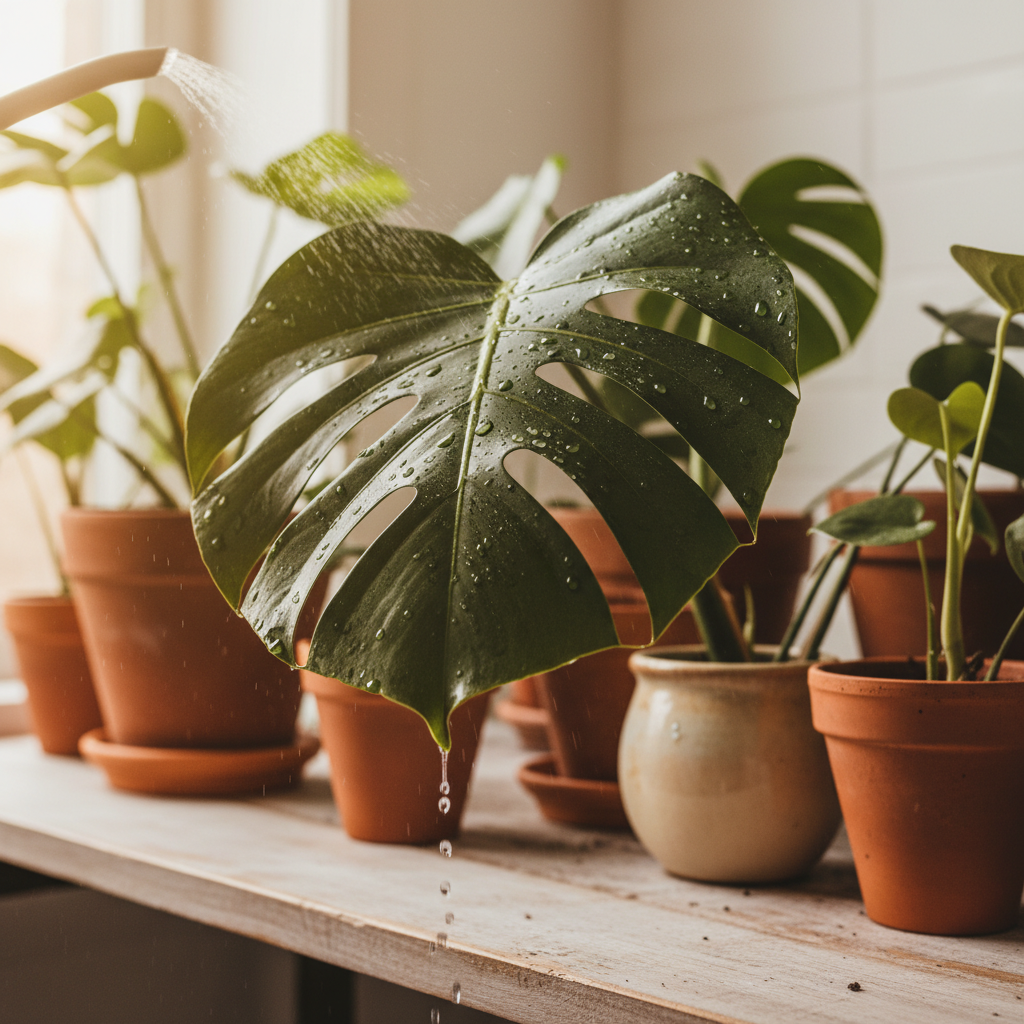
It’s 3 p.m. in February, the heat is running, and a Monstera deliciosa is drooping like it got offended by the room. At least once a week someone brings one into the shop with yellowing lower leaves and a pot that still feels cold and heavy from five days ago. Most of the time, the plant isn’t thirsty — it’s drowning in good intentions.
Monstera watering gets messy because the plant can look dramatic before it’s actually in trouble. The trick is to stop guessing and start reading the pot, the mix, and the room it lives in.
1. Read the soil before you reach for the watering can
Forget the calendar for a minute. I tell customers to check the pot with a finger 2 inches deep, or about 5 cm, and then lift it. If the top layer is dry but the pot still feels heavy, wait. If the mix is dry that same depth and the pot feels almost hollow, water it.
That simple habit beats “every Saturday” advice, which is one of those internet rules that sounds tidy and causes root rot. Monstera deliciosa, including cultivars like Monstera ‘Thai Constellation’, want a cycle of wet, then partly dry — not constant dampness. In a north-facing window, that might mean watering every 8-12 days. Near an east window with 2 hours of direct morning sun, it can be closer to 5-7 days in summer.
What I see in the shop
Most overwatered Monsteras arrive in plastic nursery pots sitting inside decorative cachepots with 200-300 ml of trapped runoff. Side note: that hidden water is a sneaky one. The top looks fine, the roots are sulking below, and the owner swears they “barely watered it.”
If you want fewer surprises, use a pot with drainage holes and a chunky mix that drains in under 10 seconds after watering. I’d rather see a plant dry a day too long than sit soggy for 48 hours.
2. Match the watering rhythm to the room, not the season
Most guides say winter means “water less.” I disagree because the room matters more than the month. A Monstera by a vent in a 68°F to 72°F room (20°C to 22°C) dries differently than one in a humid bathroom at 70% humidity. Same plant, different pace.
In my experience, the best Monstera watering schedule is really a response schedule. In a dry apartment with 30% to 40% humidity, the pot may need attention every 6-9 days. In a steamy kitchen that stays around 60% humidity, it may hold moisture for 10-14 days. Your mileage may vary, especially with a larger pot that stays wet longer than a 6-inch one.
Here’s the part people skip: light changes watering more than temperature does. A plant 3 feet from a south window under a sheer curtain drinks faster than one tucked 8 feet back from the glass. If the leaves are leaning and the soil is still damp after a week, don’t add more water “just in case.”
I tried telling one customer to water on a fixed schedule after they bought a Monstera ‘Albo Variegata’. It didn’t work. The plant lived near a sunny stairwell and dried out twice as fast as the one on their office desk. The schedule was fine on paper. The room laughed at it.
3. Use enough water to wet the whole root ball, then stop
Underwatering gets blamed a lot, but half the time the plant is getting a splash, not a soak. For a 6-inch Monstera, pour slowly until water runs from the drainage holes; that’s usually around 500-700 ml, depending on the mix. For an 8-inch pot, it may take closer to 1 liter.
You want the entire root ball to be moistened, not just the top 1 inch. If water disappears down one side, pause for 30 seconds and pour again. Chunky aroid mix with orchid bark, perlite, and a bit of coco coir takes water differently than dense peat-heavy soil, so don’t panic if it seems to absorb in stages.
Key Takeaway
Water thoroughly, let it drain completely, and empty the saucer after 5-10 minutes. Sitting water is the fastest way to turn Monstera watering into a root problem.
And no, misting the leaves doesn’t count as watering. That’s a humidity habit, not a root solution. If the plant is thirsty, the roots need the drink.
4. Pot material changes how often you’ll water
This is where people get caught. A terracotta pot pulls moisture from the mix and can shorten the interval by 1-3 days compared with plastic. Glazed ceramic holds moisture longer. Plastic is the most forgiving if you tend to forget, but it’s also the easiest place to overdo Monstera watering if your mix is already dense.
If you’re in USDA zone 9 and your Monstera summers outdoors in shade, terracotta can be great because airflow is better and evaporation is faster. Indoors, especially in a cool 65°F room (18°C), I usually prefer plastic or a light nursery pot inside a decorative cover pot, as long as you dump runoff every time.
There’s also the size issue. A plant in a 10-inch pot can stay wet for days longer than the same plant in an 8-inch pot. Bigger isn’t automatically better. Too much soil around a modest root system means more wet pockets, and wet pockets mean trouble.
5. The signs that you’re off by one watering cycle
Yellow lower leaves, soft stems, and a pot that still feels heavy after 7 days usually point to too much water or too little drainage. Crispy edges, curling leaves, and a pot that feels feather-light after 3-4 days point the other way. One symptom alone doesn’t tell the whole story, so look at the pattern.
I haven’t figured out why some Monsteras tolerate a sloppy schedule for months and others complain after one bad week. That part is inconsistent. What’s consistent is the root smell: if it smells swampy when you unpot it, Monstera watering has gone too far.
Quick check list
- Check 2 inches down before watering
- Use drainage holes every time
- Empty standing water within 10 minutes
- Adjust for light, humidity, and pot material
| Situation | Typical watering pace | Notes |
|---|---|---|
| North-facing window, plastic pot | 8-12 days | Slower drying, watch for heavy soil |
| East-facing window with morning sun | 5-7 days | Faster growth, faster moisture loss |
| Cool room at 65°F-72°F (18°C-22°C) | 7-14 days | Pot size and humidity matter a lot |
| Terracotta pot in dry air | About 1-3 days sooner | Good for forgetful overwaterers |
Q: Should I water Monstera on a fixed schedule?
A: Only as a rough reminder. A schedule can help you remember to check, but the plant should decide the actual day. Soil feel, pot weight, and room conditions beat the calendar.
Q: Can I use ice cubes for Monstera watering?
A: I wouldn’t. It’s a gimmick, and cold water can shock roots in a 70°F room. Room-temperature water is safer and easier to control.
Q: What if the leaves are drooping but the soil is wet?
A: Stop watering and check drainage fast. If the pot has no holes or the mix stays soggy for more than 48 hours, repot into a chunkier blend with bark and perlite.
Bottom line: water your Monstera only when the pot tells you it’s ready, not when the calendar does — and what does your plant’s pot feel like right now?
Sources: planethouseplant.com, soltech.com, livelyroot.com, plantlovers.eu