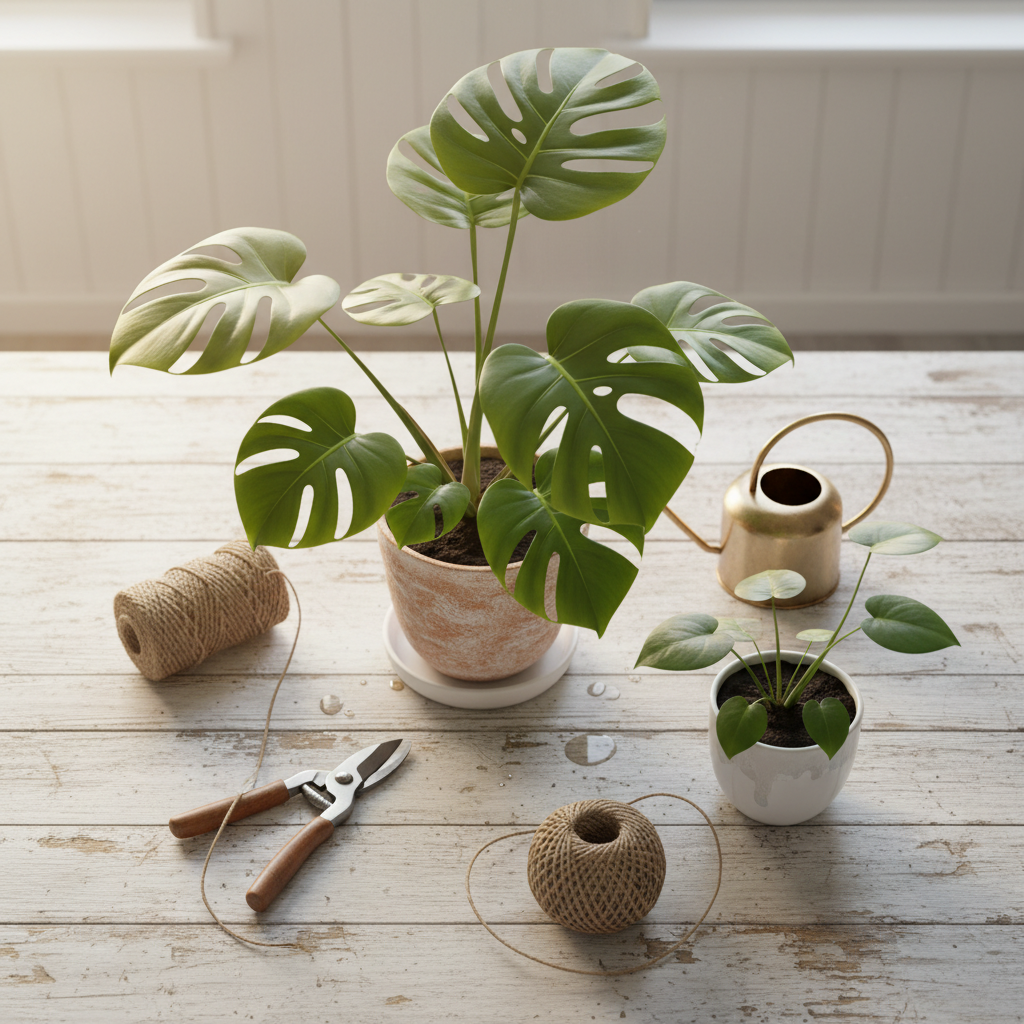
After weeks of seeing droopy Monstera deliciosa plants, I started paying closer attention to what was happening right before the leaves went soft. Most of the time it wasn’t “too much love” or “not enough misting”; it was plain old watering timing, plus the wrong pot or mix making the roots sit wet for days.
1. Read the soil before you reach for the can
Many plant owners bring in a Monstera with yellowing lower leaves and say they watered it “just yesterday.” I always start with the soil, because monstera watering is really about moisture in the root zone, not a calendar. If the top 2 to 3 inches are still damp, wait. If the pot feels heavy and the mix clings to your finger, wait again.
Most guides tell people to water on a schedule. This approach often fails. A plant in a 10-inch pot in a north-facing window can stay wet for 10 to 14 days, while the same plant near an east window might dry in 5 to 7 days. The room temperature matters too: at 68°F to 72°F (20°C to 22°C), evaporation is slower than it is at 78°F (25.5°C).
A practical test is simple. Push a wooden chopstick or skewer down 4 inches, then pull it out. If it comes back dark and cool, hold off. If it’s barely damp and the pot feels light, give water. The surface alone can be misleading; a crusty top can hide a soggy center.
2. Match watering to light, pot size, and room temperature
Light significantly impacts watering needs. A Monstera deliciosa sitting 2 feet from a sheer-curtained east-facing window will drink faster than one parked 8 feet back from the glass. Under stronger indirect light, the pot usually dries in about 6 to 9 days; in lower light, it may take 9 to 12 days. This variation is often overlooked in general watering advice.
Pot size is also crucial. A rootbound 6-inch nursery pot can dry fast, sometimes in 3 to 5 days during summer. Move that same plant into an oversized 12-inch ceramic pot, and the center can stay wet for more than a week. Many assume bigger pots are safer, but they can simply hold moisture longer.
For a healthy plant in average indoor conditions, water that’s room-temp to slightly lukewarm is ideal: around 65°F to 75°F (18°C to 24°C). Cold water isn’t a disaster, but it can slow the plant down in cool rooms. If your home sits near 40% humidity, expect the mix to dry faster than in a steamy 60% room; this is a matter of physics, not plant preference.
3. Fix the pot and mix so water actually drains
This is where much monstera watering advice falters. If the pot lacks drainage holes or the mix is primarily peat and fine dust, root rot can occur even with careful watering. The issue isn’t necessarily the amount of water, but the lack of airflow around the roots.
A chunky aroid mix, containing bark, perlite, and a moisture-holding base that still allows air circulation, is often recommended. If the mix becomes like cake batter when wet, it’s too dense. If water drains through in 2 seconds, it may be too airy for a thirsty plant unless checked frequently. A good mix should retain some moisture for 4 to 7 days without becoming waterlogged.
Pot material influences moisture retention. Terracotta dries faster and is more forgiving of overwatering. Glazed ceramic and plastic hold moisture longer, which can be beneficial in dry rooms but risky in cool conditions. A Monstera in a decorative cachepot with standing water at the bottom is a clear sign of impending root trouble.
4. Use leaf clues without falling for myths
Leaf cues are helpful but not definitive. A droopy Monstera can indicate underwatering, overwatering, root damage, low light, or a cold draft. The key is to combine leaf appearance with soil moisture readings. This combined assessment provides a clearer picture than leaves alone.
What I look for first
Soft, yellow lower leaves coupled with wet soil typically point to excessive moisture. Limp leaves with dry, pulling-away soil usually mean the plant experienced prolonged dryness. Brown, crispy edges can appear when humidity consistently drops below 35%, especially near heating vents; this isn’t solely a watering issue but affects drying rates.
Waiting until leaves droop before watering can be detrimental, especially for larger plants like Monstera adansonii, which may recover unevenly. It is generally better to water preventatively before the plant shows severe signs of stress.
5. Water differently for baby plants, big plants, and cultivars
Young plants in small pots may require watering every 4 to 6 days in summer, particularly in warmer rooms with good airflow. Larger specimens in 10- or 12-inch pots often need a slower watering schedule, sometimes every 8 to 12 days.
Monstera ‘Thai Constellation,’ for instance, may grow more slowly and use water at a different pace than a plain green Monstera deliciosa due to its variegation. While the soil should still be checked similarly, it’s less likely to need immediate watering simply because the surface appears dry.
For newly repotted plants, a pause in watering is advisable. After repotting, wait 2 to 4 days before the next full watering if the mix was already moist, then monitor closely. Fresh potting mix often retains more water than the original root ball, which can lead to overwatering. Be even more cautious if the plant was recently shipped or underwent root pruning.
6. Keep a simple routine through summer and winter
Seasonal changes significantly affect watering needs. In summer, an east-facing window can dry a pot much faster than the same spot in winter due to increased sunlight and warmth. In winter, indoor heating and shorter days slow growth, leading to reduced water consumption even if the air feels dry.
A repeatable routine of checking the plant on the same day each week and watering only when the soil indicates dryness helps prevent guesswork. If a pot is nearly dry on Friday and cooler temperatures are forecast for the weekend, it may be prudent to wait until Sunday or Monday, as cooler air slows down moisture evaporation.
Watering in measured amounts can be a useful habit. For a medium Monstera in a 7-inch pot, starting with 300 to 500 ml and stopping once even runoff is observed is a common practice. Larger specimens may require 700 ml or more. The exact volume is less important than ensuring thorough wetting followed by complete drainage.
7. Compare watering setups that work and the ones that don’t
| Setup | What it looks like | Typical watering rhythm | Risk level |
|---|---|---|---|
| Terracotta + chunky mix | Fast-drying, airy, easy to lift | About 5 to 9 days in active growth | Low to moderate |
| Plastic pot + dense mix | Holds moisture, lighter weight | Often 8 to 14 days | Moderate to high |
| Oversized decorative pot | Lots of extra soil around roots | Can stay damp 10+ days | High |
| Small nursery pot near east window | Compact root ball, good airflow | About 4 to 7 days | Low |
Ultimately, better drainage is more critical than perfect timing. A well-potted Monstera in a room with 55% humidity can tolerate a missed watering day. Conversely, a poorly potted plant can suffer root rot even when watering practices seem correct.
Key Takeaway
Water Monsteras based on soil moisture, pot size, and light conditions—not a fixed calendar. In most homes, this involves weekly checks and watering only when the root zone has partially dried.
8. Quick answers for the most common monstera watering problems
Q: Should I water my Monstera when the top looks dry?
A: Not solely based on the surface. Dry topsoil can conceal moisture several inches below, particularly in plastic pots or dense mixes. Always check the pot’s weight and use a skewer test before watering.
Q: How much water should I use?
A: Use enough to thoroughly moisten the entire root ball, allowing for slight runoff. For many medium-sized plants, this is approximately 300 to 500 ml, while larger plants may need 700 ml or more. Avoid adhering to a fixed volume if the pot size changes.
Q: Why do my leaves droop after watering?
A: If the soil was already wet, drooping after watering can indicate stressed roots rather than thirst. Look for signs of sour-smelling mix, soil temperatures below 65°F (18°C), or a pot with inadequate drainage.
In summary, provide your Monstera with a pot and mix that allows for good aeration, then water with a measured approach and a quick soil check. Healthy roots typically lead to healthy leaves.
Related reading
Sources: spiderfarmer.eu, livelyroot.com, houseplantresourcecenter.com, a-z-animals.com