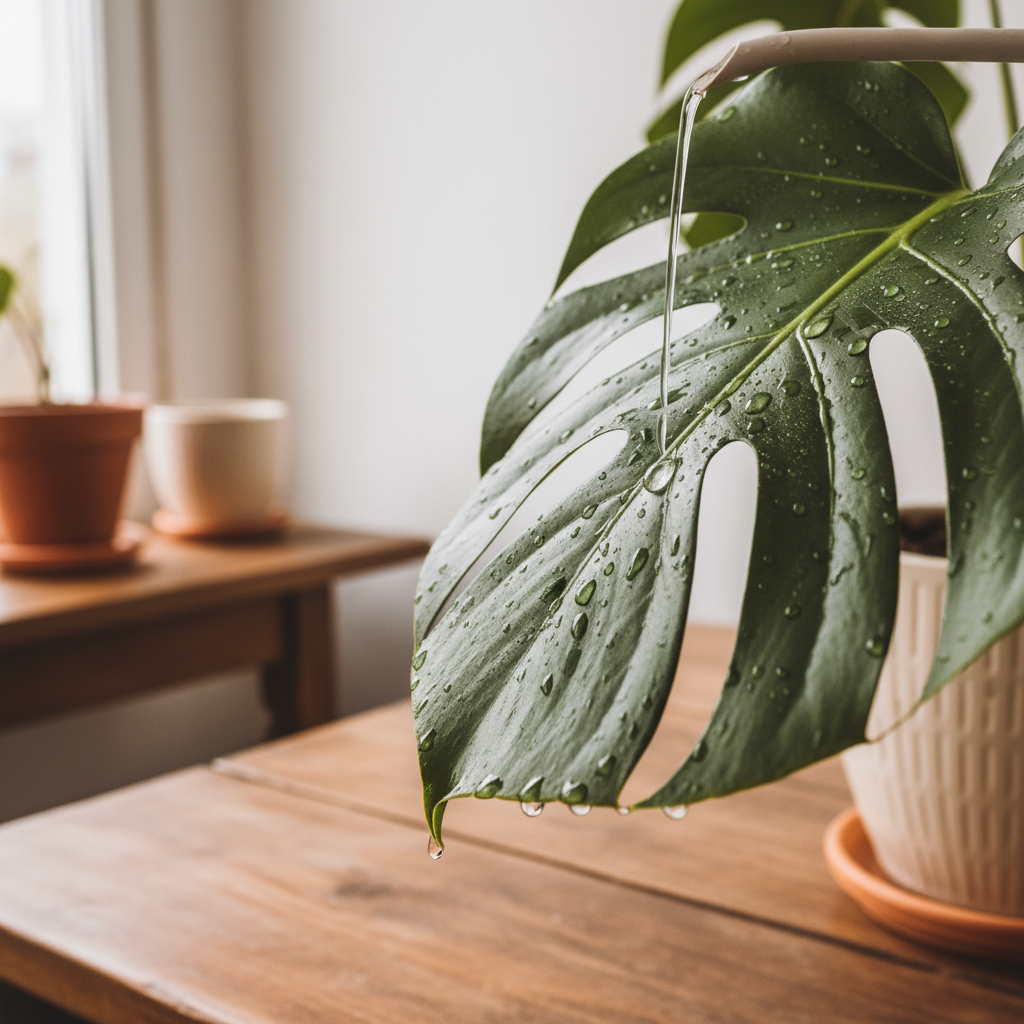
It’s 3pm in February, the heat is on, and the Monstera deliciosa by the window looks dramatic again. Droopy leaves make people panic-pour water, and that’s how you end up with mushy roots and a sad pot that smells like a swamp. Honestly, monstera watering is less about a calendar and more about reading the plant like a messy little liar.
I rotted three philodendrons before I figured this out, so yes, I’m speaking from the school of hard knocks. If your Monstera is sulking, the fix is usually simpler than the internet makes it sound.
1. Read the pot, not the clock
The fastest way to stop overwatering is to ignore the “every Saturday” advice. Most Monstera deliciosa plants want the top 2 inches of soil to dry before you water again, but the real test is the pot weight. A dry pot feels surprisingly light; a soaked one feels like it’s full of wet bricks.
For a plant in a 10-inch nursery pot, that can mean anything from 5 days in a 75°F/24°C living room to 12 days in a cooler 65°F/18°C corner. A north-facing window usually slows things down more than an east-facing window with 2 hours of morning sun. Side note: if the leaves are drooping and the soil is still wet, do not water more. That’s not thirst. That’s probably root stress.
What I check first
- Soil feels dry 2 inches down
- Pot is lighter than it was after watering
- Leaves are soft, not yellow and limp
2. How much water actually gets the job done
This is where people get weirdly vague. For monstera watering, I like a slow soak until water runs out of the drainage holes, then I stop. For a medium plant in a 6- to 8-inch pot, that’s often around 300-500 ml, but pot size and mix matter more than the number. If you’re using chunky aroid mix, the water moves faster and you may need a second small pour 10 minutes later.
Most guides say “a little water more often.” I’m not convinced. That usually encourages shallow roots and makes the top of the soil stay damp for 3 extra days. I’d rather water thoroughly, then wait until the soil actually dries. That might be controversial but it works.
If the room sits around 68-72°F (20-22°C) with 40-60% humidity, you’ll usually land in a rhythm of about once a week, give or take. In a 55°F/13°C basement room, cut way back. The plant is not trying to win a hydration contest.
3. The watering schedule that changes with light and season
Light changes everything. A Monstera in an east-facing window can drink faster than one 8 feet from a south window behind a sheer curtain, because the soil dries faster under stronger light. In summer, I’ve seen healthy plants need water every 6-8 days. In winter, the same pot may go 10-14 days before it’s ready again.
Monstera adansonii and Monstera deliciosa don’t always behave the same way, either. Adansonii tends to dry out a touch faster in my experience, while a big, root-bound deliciosa can hold moisture for what feels like forever. Your mileage may vary, especially if your home runs dry at 30% humidity or sits closer to 60%.
For Monstera ‘Thai Constellation’, I’d be even more careful. The variegated leaves are gorgeous, but the plant can be slower to recover from overwatering. If you’re in USDA zone 9 and moving it outdoors for summer, check the pot every 2-3 days because wind and sun can change the timing fast.
Key Takeaway
Water by soil dryness and pot weight, not by a fixed day of the week.
4. The mistakes that rot roots faster than drought ever will
Overwatering usually looks boring at first: yellowing lower leaves, a pot that never quite dries, and soil that smells off after 24 hours. Underwatering is louder. The leaves curl, get floppy, and the plant perks up within hours after a proper soak. That difference matters.
Here’s the part people skip: drainage. If your pot has no hole, monstera watering gets risky fast. A drainage hole plus a chunky mix is cheaper than replacing a plant. A decent terracotta pot might cost $8-$20, and honestly that’s less painful than losing a $35 Monstera ‘Thai Constellation’ to root rot.
Also, don’t mist the leaves and call it watering. That’s mostly theater. It won’t fix dry soil, and it won’t rescue roots sitting in soggy compost.
5. The quick-check routine I use before I pick up the can
I keep this boring on purpose. First, stick a finger into the soil about 2 inches. Second, lift the pot. Third, look at the leaves for stiffness, not just droop. If all three signs point to dry, water until you see runoff, then empty the saucer after 15 minutes.
For a plant in a 12-inch pot, that runoff check matters more than an exact volume. If water pours straight through in 3 seconds, your mix may be too airy. If it sits on top for more than 20 seconds, the soil may be compacted. Both are clues. Neither means “more water now.”
One practical trick: if you keep forgetting, set a 72-hour reminder after watering to check soil dryness, not to water again. That tiny delay has saved me from my own bad instincts more than once.
| Condition | Typical timing | What to do |
|---|---|---|
| 75°F / 24°C, medium light | About 6-8 days | Water deeply when top 2 inches are dry |
| 68°F / 20°C, east-facing window | About 8-12 days | Check pot weight before watering |
| 65°F / 18°C, low light | About 10-14 days | Wait longer; avoid soggy soil |
Q: Should I water my Monstera on a strict schedule?
A: No. A strict schedule is how you end up watering wet soil. Check dryness, pot weight, and room conditions instead.
Q: What’s the best water amount for monstera watering?
A: Enough to soak the root ball until water drains out. For many 6- to 8-inch pots, that’s roughly 300-500 ml, but the pot and mix matter more than the number.
Q: Why do the leaves droop even when the soil is wet?
A: That usually points to overwatering, poor drainage, or early root damage. If the soil stays wet for more than 5 days in a small pot, back off and let it dry.
Bottom line: Water Monstera deliciosa only when the soil has dried enough to earn it, then soak thoroughly and let the pot drain — are you checking the pot, or just hoping for the best?
Related reading
Sources: spiderfarmer.eu, livelyroot.com, planethouseplant.com, a-z-animals.com