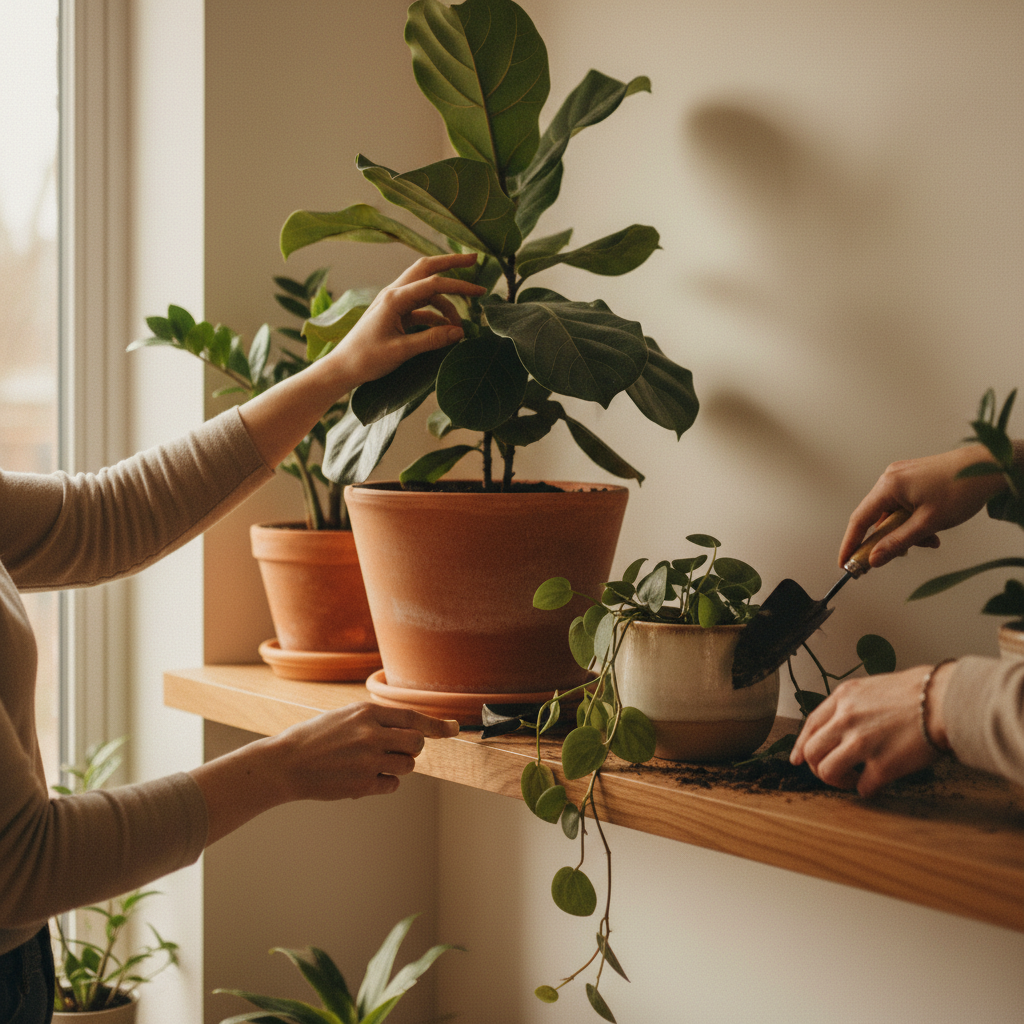
I killed a peace lily in January 2022 after keeping it in a 58°F (14°C) room by a drafty window and watering it like it was still July. The soil stayed wet for 11 days, the leaves yellowed, and then the whole thing collapsed. That mess taught me the boring truth: winter indoor plants usually die from too much water, too little light, and cold air moving around like it owns the place. Honestly, once I stopped treating winter like a normal growing season, my plants quit throwing tantrums.
Why do winter indoor plants look fine one week and miserable the next?
Because winter changes three things at once: light, temperature, and evaporation. A pothos (Epipremnum aureum) sitting 3 feet from a north-facing window may get less than half the usable light it had in October, and that slowdown shows up as droopy stems, slower new growth, and soil that stays damp much longer. I’m not convinced most “yellow leaf” panic is a nutrient issue in winter. It’s usually water sitting in the pot while the plant is basically half-asleep.
My own bad habit used to be assuming a dry-looking top layer meant the whole pot was ready. It wasn’t. A 6-inch terracotta pot can feel dry on top and still be soggy 2 inches down. Side note: if your pot is in a saucer and you keep seeing water after 30 minutes, dump it. That standing water is doing more damage than people want to admit.
What the room itself is telling you
Most winter indoor plants are happier around 65-75°F (18-24°C) during the day, with nights not dropping below 60°F (16°C). A snake plant (Dracaena trifasciata) can tolerate less-than-perfect conditions, but it still hates cold blasts from windows that hit 45-50°F (7-10°C) overnight. If the plant sits near a radiator, the opposite problem shows up: crispy tips and bone-dry soil in a day or two. That’s not “low maintenance.” That’s a stress test.
Key Takeaway
Winter indoor plants usually need less water, steadier temperatures, and more light than they get by default. The plant is often fine; the room is the problem.
How should you water without rotting the roots?
Here’s the part that contradicts the usual guide: I water less by schedule and more by weight. Most guides say to check the top inch, and sure, that works sometimes. But for winter indoor plants, I’d rather lift the pot and wait until it feels noticeably lighter. That saved me from repeating the philodendron disaster. I rotted three philodendrons before I figured this out, and every single one had been “just a touch damp.”
For a 6- to 8-inch pot, I usually pour 150-250 ml, then stop and let excess drain fully. A monstera deliciosa in winter might go 10-14 days between waterings in a cool room, while a small fern under a humidifier may need water sooner. Your mileage may vary, especially if you’ve got forced air heat. A room at 35% humidity dries plants out fast, but that does not mean the roots want more water. Big difference.
Reading the soil before you pour
If you want one practical rule, make it this: water only when the pot feels light and the soil is dry at least 1-2 inches down. For moisture lovers like calathea, that window is shorter; for ZZ plants, it’s longer. If the leaves are limp and the pot still feels heavy, stop and wait. That’s not thirst. That’s a warning.
Most overwatering happens because people react to droop with water. Don’t. Droop in winter can mean cold roots, low light, or both. I’d rather see a plant slightly thirsty for 24 hours than sitting in wet mix for a week.
Where do you put them so they don’t hate the season?
Placement matters more in winter than people think. A good spot in August can become a bad one by November. I move sensitive plants closer to an east-facing window, or to a south-facing window with a sheer curtain if the sun is harsh. A Monstera ‘Thai Constellation’ got leggy for me when it sat 6 feet back from the glass; moving it to within 18 inches of filtered light made the new leaves come in tighter and less sad-looking. Not magical. Just physics.
Humidity helps, but it’s not a cure-all. I like 45-55% humidity for most tropicals, and a small humidifier running 8-12 hours overnight can make a real difference in a room that drops to 30%. Still, I’m not convinced pebble trays do much beyond making us feel organized. If you already have one, fine. If not, don’t expect miracles from a dish of wet rocks.
| Plant type | Winter placement | Watering rhythm |
|---|---|---|
| Snake plant | Near a sunny window, away from cold glass | Every 3-4 weeks |
| Pothos | East window or filtered south light | About every 10-14 days |
| Peace lily | Bright indirect light, no drafts | When the pot feels light |
| ZZ plant | Medium light, stable room temperature | Every 3-5 weeks |
One more thing: don’t stick plants right against freezing glass. A window can be 52°F (11°C) while the room is 70°F (21°C), and that temperature swing is enough to bruise leaves over a few nights. If you’ve ever seen mysterious brown patches on the side facing the glass, that’s probably your culprit.
FAQ
Q: Should I fertilize winter indoor plants?
A: Lightly, or not at all, depending on the plant. If growth has slowed to a crawl, skip fertilizer until late winter or early spring. Feeding a dormant plant can create weak growth that stretches and collapses.
Q: Do winter indoor plants need grow lights?
A: Sometimes, yes. If your room gets less than 2-3 hours of decent daylight, a simple grow light for 10-12 hours can help a lot. I use one for a fern that would otherwise sulk by December.
Q: Why are the leaf tips brown even when I’m watering?
A: Usually dry air, mineral-heavy water, or both. If your humidity is below 35%, brown tips are common. Switching to filtered water and moving the plant away from vents often helps more than adding extra water.
Practical takeaway: put winter indoor plants in steadier light, water by pot weight instead of habit, and keep them away from cold glass and blasting heat.
Related reading
Sources: coastofmaine.com, lancaster.unl.edu, copiahomeandgarden.com, themillstores.com, straders.net