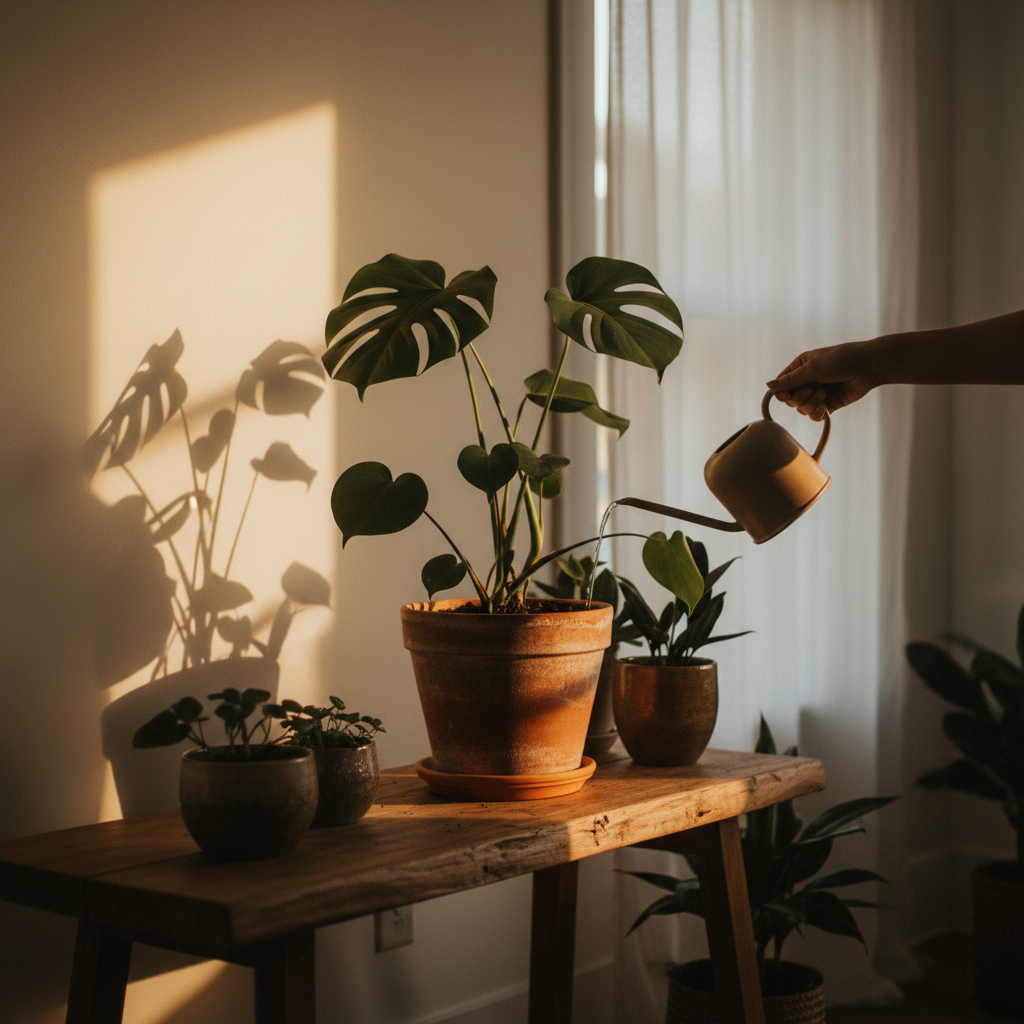
I used to think more water was the safest move. I was wrong. I rotted three philodendrons before I figured this out, and my Monstera deliciosa was next in line for the same bad treatment until I slowed down and started checking the pot instead of guessing.
Honestly, monstera watering is less about a calendar and more about reading the plant’s setup. A Monstera in a 6-inch pot on a north-facing window ledge behaves nothing like one in a 10-inch nursery pot under a skylight, and that difference matters more than people admit.
1. Read the soil before you reach for the can
The fastest way to stop overwatering is also the least glamorous: stick your finger in the mix. If the top 2 inches are still damp, I wait. If the pot feels heavy and the soil clings coolly at about 65-75°F (18-24°C) room temperature, I leave it alone for another day or two. That sounds boring, but boring keeps roots alive.
I’m not convinced the “water on a schedule” advice helps most people. In a terracotta pot, a Monstera might need water after 5-7 days in summer; in a plastic pot, the same plant may go 10-14 days. Side note: if the mix is peat-heavy and stays soggy for 48 hours, that’s a potting problem, not a thirst problem.
For a healthy, active plant, aim for a thorough soak that wets the root ball, then let excess drain completely. I like to pour slowly until I see runoff, usually 300-500 ml for a smaller plant or much more for a bigger pot, but the real test is whether the whole root zone got hit. A dry crust on top with a swamp underneath is how people end up with mushy stems and yellow leaves.
2. Match watering to light, pot size, and season
Monstera watering changes with the room. A plant in filtered light through a sheer curtain dries faster than one tucked farther back in the room, and that can shave days off the wait. In my house, a Monstera near an east-facing window in spring often wants water around once a week, while the same plant in winter may stretch to 12-16 days.
Temperature matters too. Between 70-78°F (21-26°C), growth speeds up and the soil dries faster. Drop into the 60-65°F (16-18°C) range, and the roots use water much more slowly. If your place runs dry at 30-40% humidity, expect the top layer to crust faster, but don’t assume the whole pot is dry just because the surface looks dusty.
This is where pot size trips people up. A Monstera ‘Thai Constellation’ in a 4-inch nursery pot can dry in 4-6 days under good light, while a mature specimen in a 12-inch pot may stay wet for well over a week. Most guides say bigger pots are safer because they hold more water. I disagree because oversized pots are exactly how you get root rot when the root system is still small.
3. Water deeply, then stop fussing
The best monstera watering habit is simple: soak, drain, and leave it alone. Don’t give tiny sips every other day. That’s the kind of advice that sounds gentle and ends with half-dry roots and a sad plant. I’d rather water thoroughly once than keep “topping off” the pot like I’m refilling a coffee mug.
If your pot has drainage holes, water until you get steady runoff from the bottom. For a 6- to 8-inch pot, that might mean 250-700 ml depending on the mix. Then empty the saucer within 10 minutes. If the pot sits in water for an hour, the lower roots stay oxygen-starved, and Monstera roots hate that more than they hate being slightly dry.
After watering, give it 2-3 hours to settle before putting it back in a decorative cachepot. That little pause helps you catch hidden drainage issues. I’ve had plants look fine on top and still sit in a puddle below, which is a very annoying way to learn a lesson.
4. Watch for the signs your plant is telling you
Leaves can be dramatic, but they’re useful if you read them carefully. Drooping with firm stems often means the pot is dry. Yellow leaves, soft petioles, and a sour smell from the soil usually point the other way. If the lower leaves start yellowing one by one over 7-10 days, I check the roots before I do anything else.
One practical trick: lift the pot right after watering, then lift it again 3 days later. That weight difference teaches you more than a dozen generic care posts. In a healthy setup, the pot should feel noticeably lighter by day 4 or 5. If it still feels heavy after 6 days in a 72°F (22°C) room, you probably need a chunkier mix or less frequent watering.
And yes, misting is overrated. This might be controversial but it doesn’t fix dry air, and it definitely doesn’t fix bad watering. A humidifier set around 50-60% humidity does more for leaf quality than spraying the foliage and pretending the problem is solved.
5. A quick comparison that saves plants
If you only remember one thing about monstera watering, make it this: match the method to the container and environment. The same plant can need very different care depending on the pot, light, and season.
| Setup | Typical wait | Water amount | What to watch |
|---|---|---|---|
| 4-inch pot, east window | 4-6 days | 150-250 ml | Light pot, dry top 1-2 inches |
| 6-inch pot, filtered light | 7-10 days | 300-500 ml | Even drying, no soggy base |
| 10-inch pot, lower light | 10-16 days | 700 ml or more | Heavy pot, slow evaporation |
| Monstera ‘Thai Constellation’ | 5-9 days | 250-600 ml | Roots dry slower in oversized pots |
Key Takeaway
Water less by habit and more by evidence. If the pot is still heavy, the soil is cool and damp, or the roots haven’t dried between waterings, wait.
Q: Should I let my Monstera dry out completely?
A: Not completely. Let the top 2 inches dry, but don’t leave the plant bone-dry for a week. A healthy Monstera likes a cycle of moist-to-dry, not drought-to-swamp.
Q: Is bottom watering okay for monstera watering?
A: Yes, sometimes. It can work for small pots, but I still prefer top watering because it flushes salts and lets you see when runoff starts. If you bottom water, don’t leave it sitting in 1 inch of water for more than 20-30 minutes.
Q: Why do the leaves yellow after watering?
A: Usually because the soil stayed wet too long or the pot is too large for the root ball. Check drainage, check the roots, and back off the watering frequency for 7-14 days.
Bottom line: Water your Monstera deeply, then wait for the soil and pot weight to tell you when it’s time again. What’s the last plant you overwatered trying to “help”?
Related reading
Sources: spiderfarmer.eu, epicgardening.com, gbnews.com, livelyroot.com, bloomscape.com