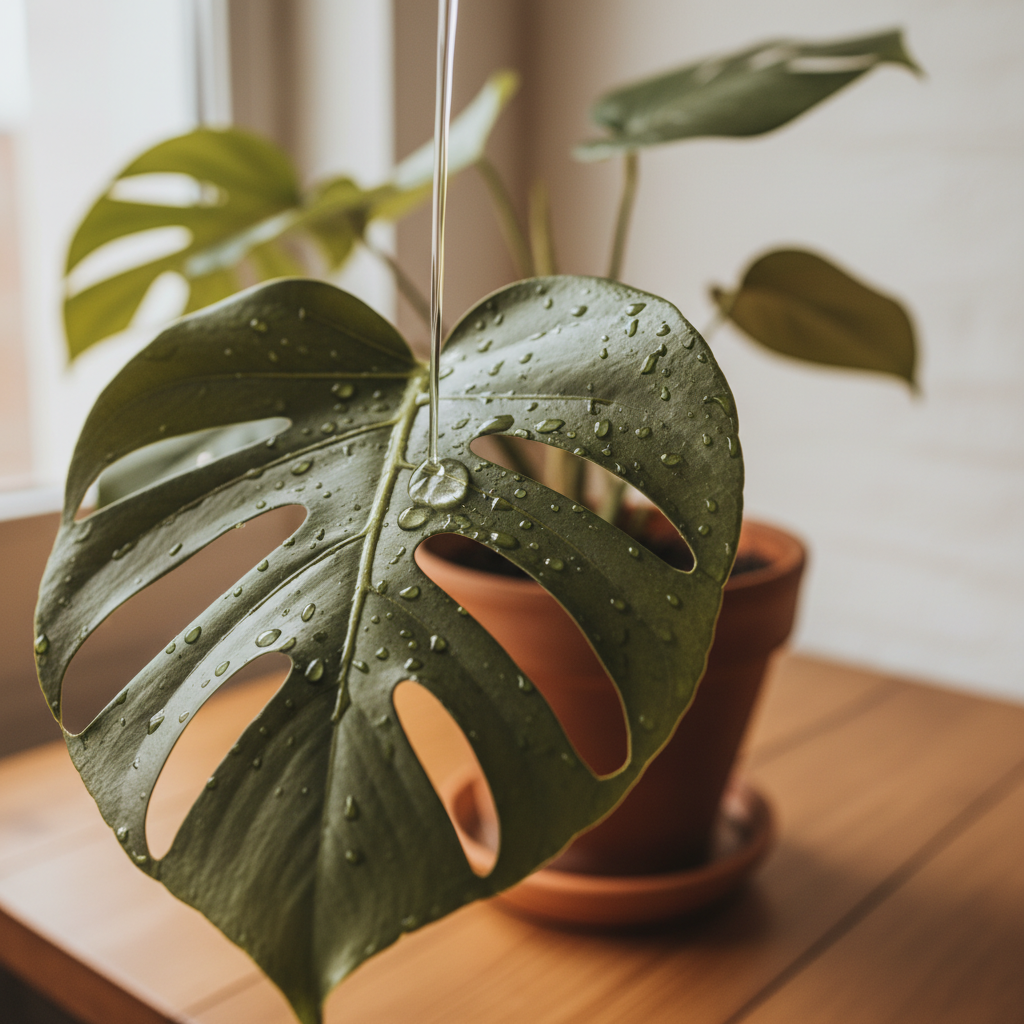
At least once a week someone brings in a Monstera with yellowing leaves and says they’ve been watering “like clockwork.” That’s usually the problem. Monstera watering fails more often from a schedule than from neglect, and I can back that up with what I see in the shop all year long.
The fix is less glamorous than the internet makes it sound: read the soil, respect the pot, and stop treating every home like a greenhouse. The plant will tell you plenty if you stop pouring on autopilot.
1. The watering rule I trust more than a calendar
Most guides say to water Monstera deliciosa on a set rhythm. I disagree because homes aren’t identical. A plant in a 10-inch terracotta pot near an east-facing window dries very differently than one in glazed ceramic three feet from a north-facing window.
Here’s the practical version: water when the top 2 inches, or about 5 cm, are dry and the pot feels noticeably lighter. In a chunky mix, that might happen in 6-8 days during summer. In winter, especially in a 65-70°F (18-21°C) room, it can stretch to 10-14 days.
Side note: I tried the “just add ice cubes” trick years ago on a customer’s Monstera adansonii. It didn’t work then, and it still doesn’t impress me now. Room-temperature water is simply kinder to roots.
If you want one number to remember, make it this: a thorough soak, then a pause. Let excess water drain for at least 10-15 minutes. Never leave the nursery pot sitting in a saucer full of runoff. That’s how roots turn mushy, and mushy roots are a fast track to yellow leaves and a sad stem.
2. Reading the plant instead of guessing
The leaves and stems give you clues long before the plant collapses. Slightly droopy leaves with dry, pale soil usually mean thirst. Yellowing lower leaves, a sour smell, or a pot that still feels heavy after 4-5 days points the other way.
The soil test I actually use
Stick a finger down to the second knuckle, or use a wooden chopstick if you hate getting dirt under your nails. If it comes out cool and dark, wait. If it comes out mostly dry with just a little cling, it’s watering time. That’s more reliable than “every Saturday,” and it works for Monstera deliciosa, Monstera adansonii, and even a fussy Monstera ‘Thai Constellation’.
Humidity matters too. Around 50-60% is comfortable; below 40% indoors, the mix can dry unevenly and the edges of newer leaves may get crispy. I see this a lot in heated apartments. The plant may need water sooner, but not necessarily more often in larger amounts.
For a typical 8-inch pot, I like to water until I see a steady trickle from the drainage holes, which is often around 500-750 ml depending on the mix. Chunky bark-heavy blends take more. Peat-heavy mixes take less and stay wet longer, which is why I don’t love them for most monsteras.
3. Pot, mix, and light: the three things that change everything
Monstera watering gets weird fast if the pot material is wrong. Terracotta dries faster and forgives overwatering better. Plastic and glazed ceramic hold moisture longer, which is nice in a dry room but risky if the plant sits in lower light.
A chunky aroid mix is the sweet spot: bark, perlite, and a moisture-holding base that still drains. If the soil stays wet for more than 5-7 days after watering, the mix is too dense or the pot is too large. I’d rather repot into a 1-2 inch bigger container than jump straight into a giant decorative pot.
Light changes the watering rhythm more than people expect. A Monstera in two hours of direct morning sun may need water almost twice as fast as one parked in filtered light through a sheer curtain. In USDA zone 9, outdoor shade in summer can speed things up even more, but indoor winter heat usually reverses that.
And no, you don’t need to “mist for humidity” to fix watering problems. That’s internet folklore. If the mix is right and the pot drains, the plant will do better with consistent root moisture than with a fog machine fantasy.
| Pot / setup | Typical dry-down | What I’d do |
|---|---|---|
| Terracotta, east-facing window | About 6-8 days | Check twice weekly |
| Plastic pot, north-facing window | About 10-14 days | Wait for lighter pot |
| Glazed ceramic, chunky mix | About 7-10 days | Water thoroughly, then drain |
4. The mistakes that keep showing up on my counter
The biggest one is overwatering by habit. The second is using a pot that’s too large for the root ball. A Monstera in an oversized 12-inch pot can stay wet for 2 weeks or more, even in decent light, and that’s asking for trouble.
Another common issue: people pour a small splash every few days. That only wets the top layer and leaves the lower roots thirsty. Better to water deeply, then wait. A plant that gets 400 ml once is usually in better shape than one getting 100 ml every three days.
I haven’t figured out why so many folks trust the calendar more than the substrate, but they do. If you’re unsure, lift the pot. It’s boring advice, but it works.
Key Takeaway
Water Monstera when the top 2 inches are dry, the pot feels lighter, and the mix has actually dried down. Forget the rigid weekly routine.
Q: Should I water Monstera more in summer?
A: Usually yes, but only because heat, sun, and airflow dry the mix faster. In a 75-80°F (24-27°C) room, that may mean checking every 5-7 days instead of every 10-14.
Q: How do I know if I’ve overwatered?
A: Yellow leaves, a heavy pot that stays heavy, and soil that smells off are the big clues. If the mix is still wet after 7 days, pause watering and improve drainage.
Q: Does Monstera ‘Thai Constellation’ need different watering?
A: Not a different species-level rule, but variegated plants often grow slower and use water more slowly. Your mileage may vary, so check the soil instead of assuming it drinks like a fast-growing green Monstera.
| Condition | Watering cue | Typical interval |
|---|---|---|
| 65-70°F (18-21°C), lower light | Pot still heavy | 10-14 days |
| 72-78°F (22-26°C), filtered light | Top 2 inches dry | 7-10 days |
| 75-80°F (24-27°C), strong morning sun | Soil dries fast | 5-7 days |
Bottom line: water the soil you have, not the schedule you wish you had. What’s your Monstera sitting in right now?
Related reading
Sources: abeautifulmess.com, livelyroot.com, plantproper.com, soltech.com, houseplantresourcecenter.com