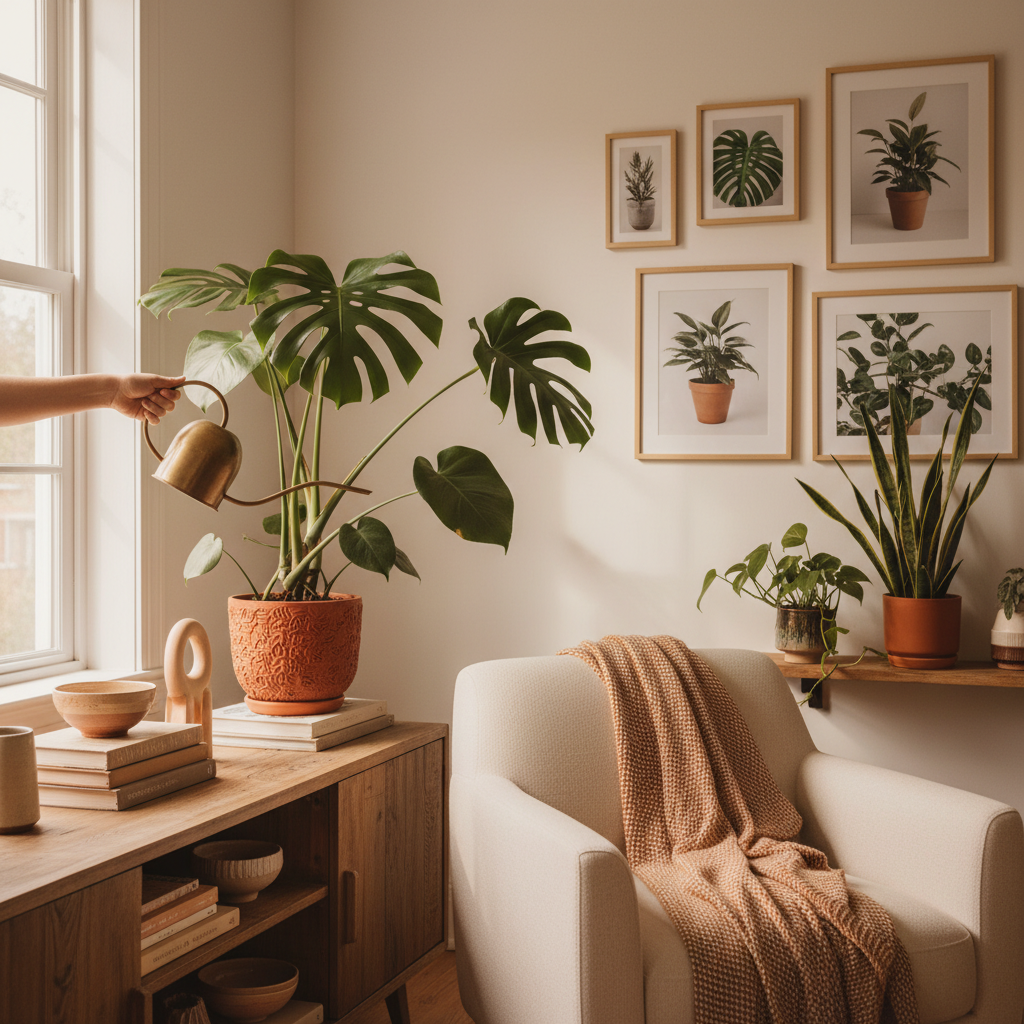
I used to think a thirsty Monstera was always a problem that needed more water. I was wrong. At the shop, the plants that come in droopy are just as often overwatered as they are dry, and the roots tell the real story long before the leaves do.
At least once a week someone brings in a Monstera deliciosa with yellowing lower leaves, a pot that still feels heavy, and a story about “being extra careful” with watering. That’s usually the clue right there. Monstera watering works best when you stop guessing and start reading the soil, the pot, and the room.
Why does my Monstera look thirsty even when the soil is wet?
This is the classic mistake. A droopy Monstera can look dry on top while the root ball stays soggy underneath, especially in a heavy ceramic pot or a cachepot that traps runoff. I see this most in plants sitting in low light, like a few feet back from a north-facing window, where the soil can stay damp for 10 to 14 days.
Most guides say to water on a strict schedule. I disagree because the plant doesn’t care what day it is; it cares whether oxygen can reach the roots. If the mix is dense, the lower half can stay wet far too long. That’s why a moisture meter or a finger test down 2 inches is more useful than a calendar reminder.
Side note: if the pot feels suspiciously heavy three days after watering, don’t “help” it with another pour. That’s how root rot starts. In my experience, a Monstera in a chunky aroid mix dries much more evenly than one planted in straight peat-heavy indoor soil.
How should you read the soil before you pour?
Here’s the practical version of monstera watering: check the top 2 inches, then check below that if you can. If the upper layer is dry but the root zone still feels cool and damp, wait. If the mix is dry 2 inches down and the pot has lost most of its weight, water thoroughly until you see runoff.
What I do in the shop
I tell customers to water slowly, not in one quick blast. For a 10-inch pot, that might mean 500–750 ml poured in stages so the mix can absorb it instead of channeling straight down the sides. Then let it drain fully. Never leave a Monstera sitting in a saucer of water for more than 15 minutes.
Temperature matters too. In rooms around 65–75°F (18–24°C), a Monstera usually uses water at a steady pace. In a hotter space near 80°F (27°C), it may dry faster. In cooler rooms around 60–65°F (16–18°C), it slows down and needs less frequent watering. Humidity around 40–60% is workable; lower than that, the plant may lose moisture faster, especially with an east-facing window and afternoon heat.
Key Takeaway
Monstera watering is less about frequency and more about drainage, pot weight, and how fast your room dries the mix.
What kind of pot and soil make watering easier?
This is where people fight the plant without realizing it. A plastic nursery pot inside a decorative cover pot is usually safer than a heavy glazed pot with no easy drainage check. Terracotta can help a mix dry faster, which is useful in humid homes, but it can also push a plant too dry if your room runs around 35% humidity.
For soil, I’d rather use a chunky aroid mix than something fine and muddy. Think bark, perlite, and a quality indoor potting base. That kind of mix gives roots air, which matters more than people think. Monstera adansonii and Monstera deliciosa both appreciate that structure, while a cultivar like Monstera ‘Thai Constellation’ can be especially fussy if kept wet too long.
One more thing: if you repot and the root ball is packed tight with old peat, don’t assume the new mix will fix everything overnight. It often takes 2 to 3 watering cycles for the whole pot to settle into a better rhythm.
| Setup | Watering behavior | My take |
|---|---|---|
| Plastic nursery pot | Dries moderately | Easy to manage for most homes |
| Terracotta | Dries faster | Good in humid rooms, risky in dry air |
| Heavy glazed pot | Dries slowest | Only if drainage is excellent |
How often should you water through the seasons?
There isn’t a perfect number, but there are usable ranges. In spring and summer, many Monsteras need water about every 7 to 10 days in average indoor light. In winter, that can stretch to 10 to 21 days, especially if the plant is in a cooler room or gets less than 2 hours of direct morning sun.
That said, I’ve seen the same plant shift from weekly watering to every 12 days simply because the heat kicked on less often and the room stayed steady. Your mileage may vary. A Monstera near a south window in USDA zone 9 conditions indoors will behave differently than one tucked beside a sheer curtain in a draft-free apartment.
If you want a simple rule, water when the pot is light and the top 2 inches are dry. That’s the boring answer, but it’s the one that saves roots.
What mistakes keep showing up with Monstera watering?
The biggest one is loving the plant to death. People water a little every few days instead of watering deeply and letting the mix breathe. That leads to weak roots and yellow leaves. Another common mistake is using a pot that’s far too large; extra soil holds extra water, and the plant can’t drink it fast enough.
Another myth: misting replaces watering. It doesn’t. Misting may change the leaf surface for a few minutes, but it won’t hydrate the root zone. I also wouldn’t trust a fixed “once a week” rule unless you’ve already matched the pot, mix, and light to that pace.
Quick checks before you water
- Lift the pot and compare it to how it felt right after watering.
- Look for pale, limp leaves with wet soil — that often means too much water, not too little.
- Make sure runoff can escape in under 5 minutes.
- Check the room: 65–75°F (18–24°C) is easier to manage than a hot, dry corner.
| Symptom | Likely issue |
|---|---|
| Yellow lower leaves + wet pot | Too much water or poor drainage |
| Curled leaves + very light pot | Too dry |
| Brown edges + dry air | Low humidity or inconsistent watering |
Q: Should I water my Monstera on a schedule?
A: Use a schedule only as a reminder to check, not as the rule itself. Soil dryness, pot size, and light matter more than the calendar.
Q: Is bottom watering good for Monsteras?
A: It can work, but I prefer top watering for most plants because it flushes salts and lets you see how quickly the mix absorbs water. Bottom watering is fine if the pot drains well and you don’t leave it sitting too long.
Q: What’s the fastest way to tell if I overwatered?
A: Heavy pot, damp soil, and yellowing leaves are the big clues. If the soil smells sour, I’d unpot it and inspect the roots sooner rather than later.
Monstera watering works best when you water deeply, then wait for the mix to earn the next drink. If you remember only one thing, make it this: roots need air as much as they need moisture.
Related reading
Sources: livelyroot.com, houseplantresourcecenter.com, talkplanttome.com, spiderfarmer.eu, abeautifulmess.com