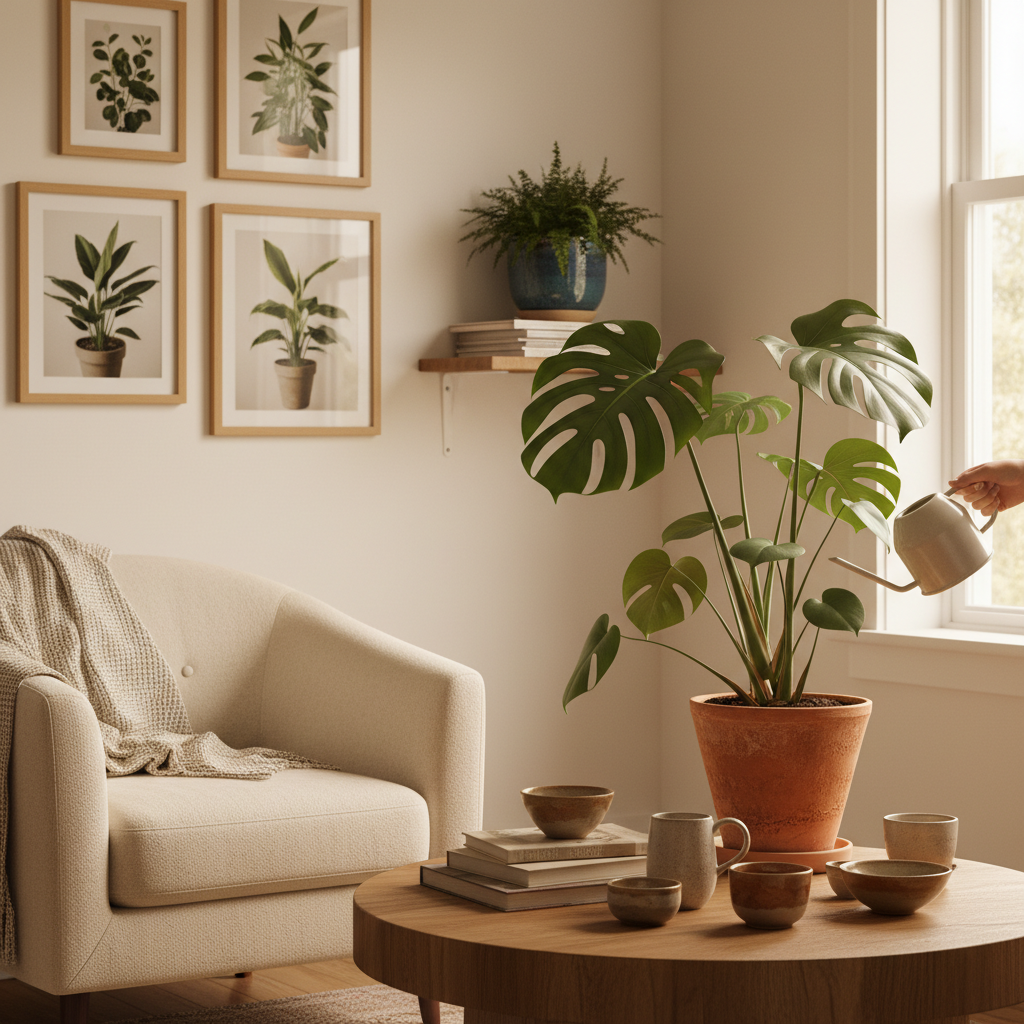
I lost a Monstera deliciosa in February 2023 because I trusted a calendar instead of the pot. The roots stayed wet for too long, the lower leaves yellowed, and by the time I checked, the stem had gone soft at the base. What I learned is simple: monstera watering works best when you read the soil and the room, not the date on your phone.
1. Watering on a schedule instead of checking the pot
Most guides give a tidy number, but that’s the part I push back on. A Monstera in a 6-inch nursery pot near an east-facing window will dry faster than one in a 10-inch cachepot tucked 2 meters from the glass. In my experience, the plant cares more about airflow, pot size, and light than about a fixed weekly reminder.
Extension-style advice from plant care sources lines up on the same point: let the top layer dry before you water again. That usually means the upper 2 inches, or about 5 cm, feels dry and the pot is noticeably lighter. In a humid apartment at 55% humidity, that might be 7 to 10 days. In a drier room at 35% humidity, it can be closer to 5 to 7 days. Your mileage may vary.
What I look for
I press a finger into the mix, then lift the pot. If it still feels heavy, I wait. If the soil is dry to that 5 cm mark, I water slowly until I see runoff from the drainage holes. Side note: a pot without drainage is a gamble I don’t recommend, especially for Monstera adansonii, which sulks faster than Monstera deliciosa.
2. Using the wrong water amount for the pot size
Watering “a little” is how people end up with dry pockets in the root ball. For a 6-inch pot, I usually pour enough that the mix is evenly moistened and then stop once water starts to escape the bottom. That can be around 300 to 500 ml, depending on the potting mix. For a larger 8-inch pot, it may take 700 ml or more.
Sources like Houseplant Resource Center and Lively Root both emphasize thorough watering rather than tiny sips. That matches what I’ve seen with Monstera deliciosa, less so with smaller-rooted plants. Tiny amounts wet the top inch and leave the lower roots thirsty, which is a bad trade when the plant is already stressed from low light or a recent repot.
Use room-temperature water, roughly 65-75°F (18-24°C). Cold water can shock roots, and very hot water is obviously a no-go. If you’ve got a thirsty plant in a 10-inch pot, give it a patient soak, then let the excess drain for 10 to 15 minutes before putting it back in a saucer.
3. Ignoring the room conditions that change everything
Monstera watering gets easier once you factor in the environment. A plant in USDA zone 9 that summers on a shaded patio will dry differently than one indoors under 12 hours of fluorescent light. Humidity matters too. Around 40% to 60% is a comfortable range for many indoor monsteras, and once you drop below that, the mix can dry faster than you expect.
Temperature shifts also change the pace. At 68-72°F (20-22°C), my plant in a bright room needed water about every 8 days. When the apartment sat closer to 78°F (26°C) during a July heat spell, that dropped to about 5 or 6 days. In winter, when the thermostat hovered near 65°F (18°C), the same plant held moisture for nearly 12 days.
That’s why I like to think in ranges, not rules. A Monstera ‘Thai Constellation’ often wants the same basic rhythm as a standard deliciosa, but variegated leaves can make people overcompensate. Don’t. The plant still needs oxygen around the roots more than it needs sympathy.
4. The watering routine that finally worked for my Monstera
After the February failure, I switched to a simple routine: check every 3 days, water only when the top 2 inches are dry, and empty the saucer within 20 minutes. That change saved a second plant that had started drooping after repotting into a peat-heavy mix. I also mixed in more bark and perlite so the pot dried in a steadier 6 to 10 days instead of staying wet for nearly 2 weeks.
This is where a lot of generic advice gets fuzzy. People say “keep it moist,” but for Monstera that usually means “never let it bone-dry for long, and never leave it soggy.” Those are not the same thing. If the leaves start looking matte and the petioles lose firmness, check the root zone before you reach for fertilizer or a bigger pot.
Practical rule: water deeply, then wait. If the plant sits in a north-facing window and the pot is still damp after 10 days, I don’t add more water just because the leaves look dramatic. I check drainage, then I check the roots. That one habit prevents more trouble than any misting routine ever will.
| Situation | What I do | Typical timing |
|---|---|---|
| 6-inch pot, east window | Water until runoff | About 7-10 days |
| 8-inch pot, lower light | Check by weight first | About 10-12 days |
| Heat spell, 26°C / 78°F | Watch soil daily | About 5-6 days |
| Cool winter room, 18°C / 65°F | Wait for dry top layer | About 10-12 days |
Key Takeaway
For monstera watering, the pot tells you more than the calendar: check the top 2 inches, water thoroughly, and adjust for light, temperature, and pot size.
5. The small mistakes that make healthy watering look wrong
Yellow leaves don’t always mean “more water.” Sometimes they mean the opposite. One overlooked issue is compacted mix: if the soil has turned dense and slow-draining, water can sit around the roots even when the surface looks dry. Another is a cachepot that traps runoff. I learned that the annoying way after finding 120 ml of standing water in the bottom of a decorative pot.
Also, don’t chase every wilt with another pour. A Monstera can droop for a few hours after a dry spell and still recover once watered. If the stems stay limp for 24 hours, or the soil smells sour, that’s a different problem. Check roots, not just leaves.
One caveat most guides skip: in winter, heating vents can dry the top layer fast while the lower mix stays wet. That false dryness tricks people into overwatering. A finger test plus a pot-lift beats surface appearance every time.
Q: Should I mist my Monstera instead of watering it?
A: No. Misting raises humidity for a few minutes, but it doesn’t hydrate the roots. If your room is dry, a tray of pebbles or a humidifier is more useful than spray.
Q: How do I know if I’m underwatering or overwatering?
A: Underwatering usually shows up as a light pot, dry mix, and crisp edges. Overwatering tends to bring yellowing, soggy stems, and soil that stays wet for more than 10 days.
Q: Does a Monstera ‘Thai Constellation’ need special watering?
A: Not special, just careful. Its watering rhythm is similar to other monsteras, but because growth can be slower, it’s easier to overdo it. I’d still wait for the top 2 inches to dry.
Bottom line: monstera watering works best when you water deeply, then let the plant earn the next drink—what does your pot tell you right now?
Related reading
Sources: abeautifulmess.com, deplantrekkers.com, houseplantresourcecenter.com, spiderfarmer.eu, livelyroot.com